
Time for a digital health check
Written by Jonathon Milton, Chief Information Security Officer.
With the internet, we have the world at our fingertips, so it’s no surprise that 96% of Australian’s are active on the internet. Whether it be connecting over social media, stocking up on essentials from the supermarket, playing games or managing bank accounts, we are sharing more and more personal information online.
However, in recent years marked increase in predatory scammers attempting to steal personal details and commit fraud. This can lead to increased anxiety and fear when you are online and impact our overall health. While we all should be diligent when transacting online, there are some simple things that you can do to help protect yourself.
Just like a regular health check can help keep you healthy, a digital health check can help with your digital wellbeing and maintain a positive, safe, secure relationship with our online world.
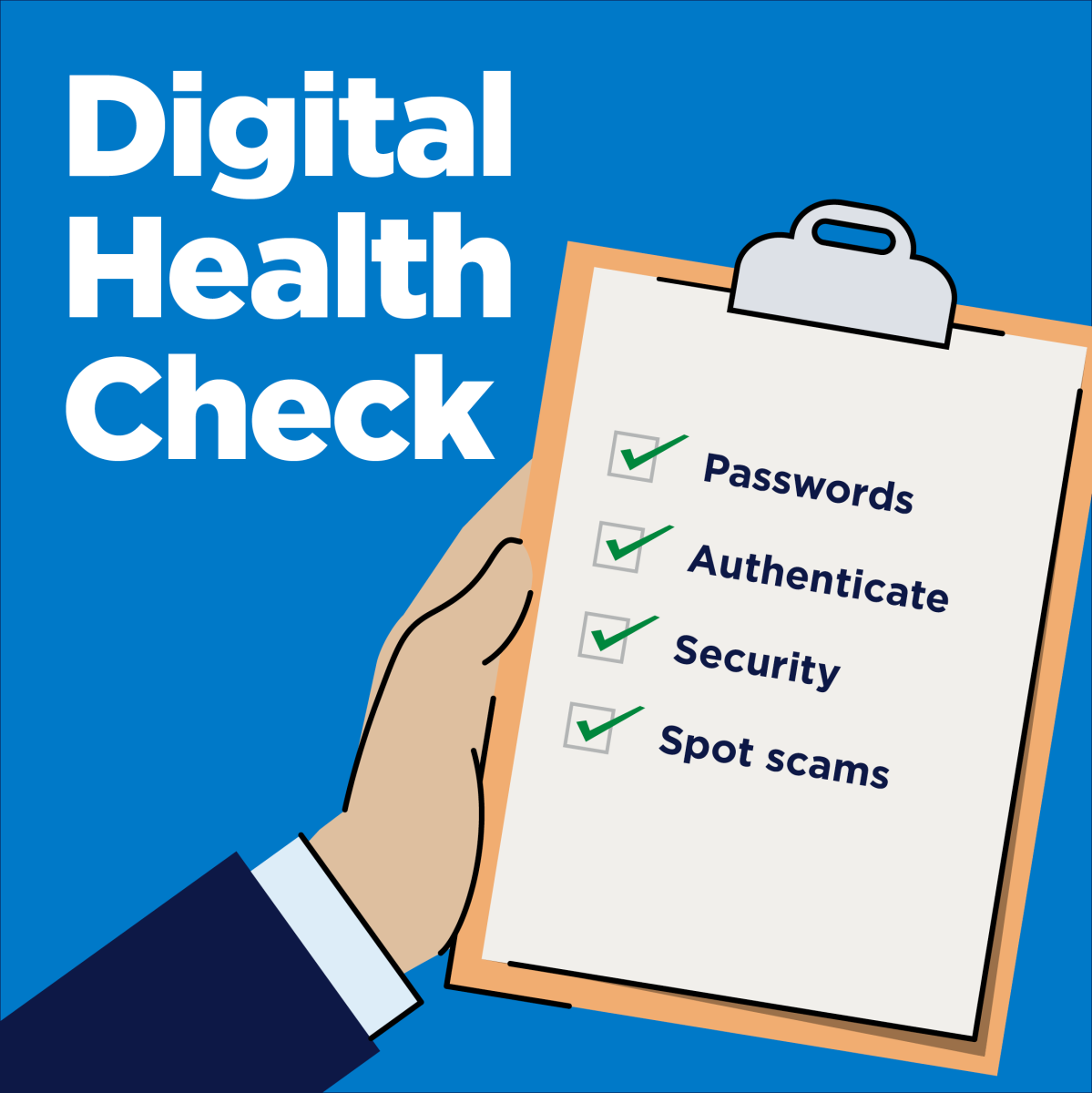
It’s cyber security awareness month – so now is a great time to do your digital health check:
Create strong passwords –and avoid re-use!
Passwords are still one of the most important layers of security for everything in our digital lives. Choosing a strong, unique password or passphrase is one of the best ways to safeguard your accounts. While it might be tempting to have the same password across multiple accounts, its important to have unique passwords for all accounts and update them regularly.
Activate Multi-Factor Authentication (MFA)
Where available, activate or register for Multi-factor Authentication (MFA) on your accounts to prevent unauthorised access to your personal information. This additional layer of protection requires at least two steps to verify your identity, which is especially important for to safeguard personal, financial or health information.
Apply updates and keep your devices secure
Any device connected to the internet is vulnerable to security breaches. This is why it’s important to keep your devices updated with the latest security measures and have auto lock features just in case they are left unattended.
Ask yourself if this is phishing and be alert to scammers
Phishing and social engineering is a successful tactic used by cyber criminals – to get around anti-virus protection and get directly to us. It can be tricky to spot a scam, so double check where the email came from, and for common scammer mistakes, like bad spelling and grammar. If you are not sure, ask a friend or family member or contact the company direct to check.
To learn more about staying healthy online or any Bupa related scams, visit our Privacy and Security Trust Centre | Bupa.


