
What comes next for healthcare in Australia? Kate Williams answers key questions
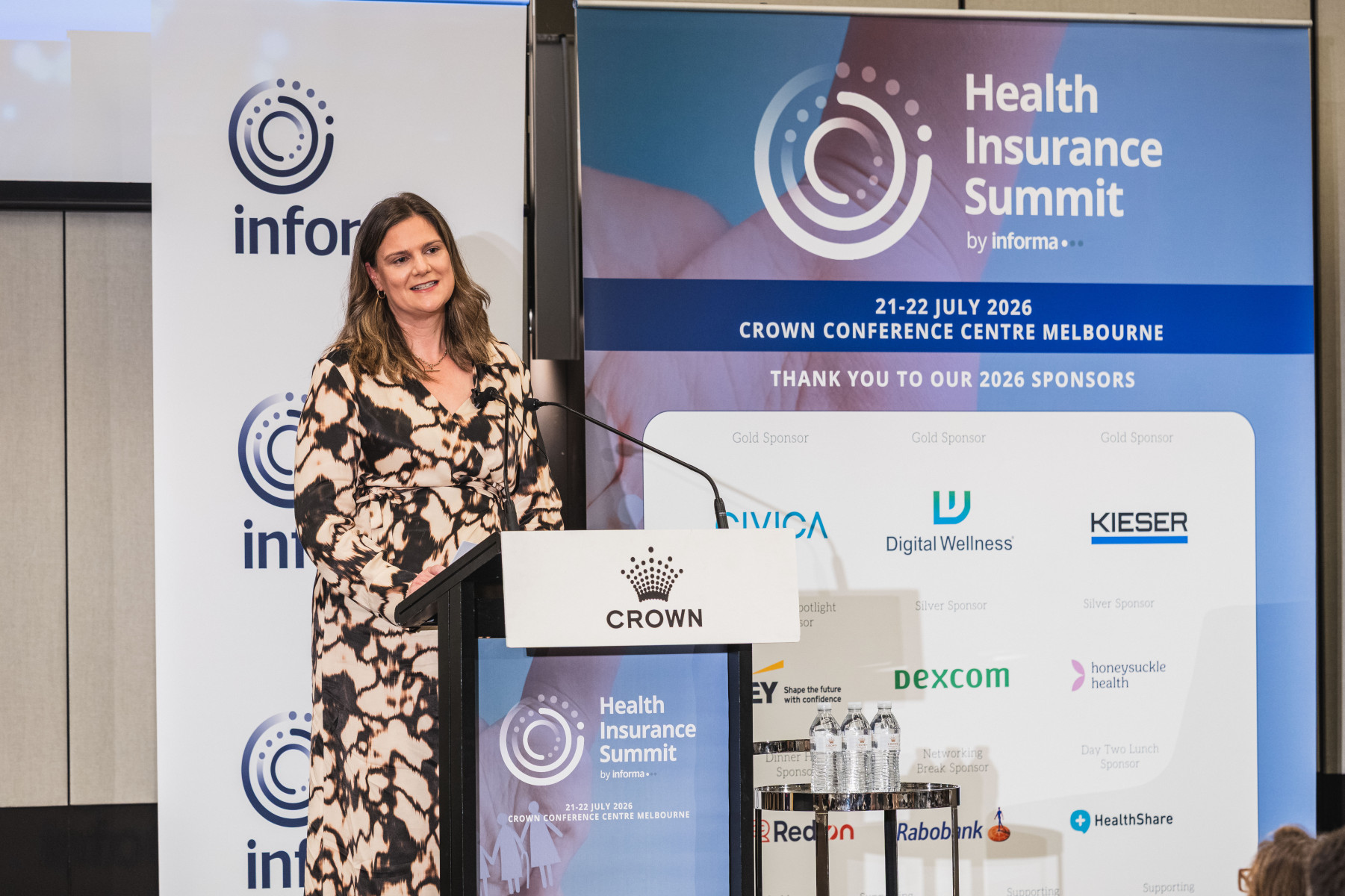
Bupa Health Insurance Managing Director Kate Williams spoke at the Health Insurance Summit about the future of healthcare in Australia. She answers key questions about healthcare confidence, healthcare navigation, connected care, affordability, prevention, personalised care, private health insurance reform and the role of technology in healthcare.
Key healthcare statistics shaping the future of healthcare in Australia
- More than 367,000 customers used a Blua service last year.
- 230,000 people accessed online GP services through Blua Virtual Consults.
- Almost 70% of these appointments were resolved in the first consultation.
- More than 60% of Blua Virtual Consults are now taking place outside of business hours
- More than 80 per cent of participants in the MoreGoodDays program reported significant improvements in back pain.
How can Australians feel more confident navigating healthcare?
We often talk about access to healthcare, and it matters enormously. But one of the biggest challenges facing Australians is confidence - knowing where to go, what to do next and that somebody is helping guide them.
Australia has one of the best healthcare systems in the world. But for many people, the experience of navigating it can still feel confusing and uncertain. You receive a diagnosis, a referral or a set of test results and suddenly you're faced with a series of decisions. What happens next? How urgently do I need to act? What will it cost? And what are my options?
Too often we ask people at their most vulnerable to coordinate their own care. And that uncertainty has consequences. People delay seeking help. They disengage.
That is why the opportunity in front of us is not just improving access. It is improving confidence.
What does connected care look like in practice?
For fifteen years, Rhys lived with chronic back pain.
Like many Australians, Rhys did everything he was supposed to do. He sought advice, tried treatments and followed recommendations. Yet despite years of effort, the pain remained.
Eventually, he found himself asking the same question many Australians ask when navigating our health system: ‘What am I supposed to do next?’
What changed for him wasn't a single appointment or intervention, it was finally having his care connected.
Through Blua, Rhys was connected with MoreGoodDays, an evidence-based program combining physiotherapy, psychology and digital support, with more than 80 per cent of participants reporting significant improvements in back pain.
What struck me most about Rhys' story wasn't that he hadn't tried physiotherapy or digital tools before. It was that, for the first time, those elements were brought together into a coordinated, multidisciplinary approach to his care.
That's what connected care looks like in practice. The physiotherapist, the psychologist and the digital support all worked together to provide continuity and guidance. Rhys had a pathway – and the confidence to follow it.
Why is healthcare becoming harder to navigate?
Australia has one of the best healthcare systems in the world. But for many people, the experience of navigating it can still feel confusing and uncertain. You receive a diagnosis, a referral or a set of test results and suddenly you're faced with a series of decisions. What happens next? How urgently do I need to act? What will it cost? And what are my options?
Too often we ask people at their most vulnerable to coordinate their own care. And that uncertainty has consequences. People delay seeking help. They disengage.
In many ways, navigating healthcare today can feel like trying to find your way through a new city using an old street directory. You can eventually get where you need to go, but it is slow, stressful and there is always a lingering uncertainty about whether you're heading in the right direction.
How will AI and technology change healthcare?
Digital, AI and genomics can reduce fragmentation and support preventative and personalised care. There are significant opportunities to leverage technology to improve care coordination and help customers stay healthier for longer.
We see the greatest opportunity in prevention, personalisation, earlier intervention and reducing barriers to care.
Most of us wouldn't travel that way today. We use GPS. Not because it drives the car, but because it helps us understand our options, adjust when circumstances change and move forward with confidence.
Over time, Blua will become an even more personalised health companion helping people navigate increasingly complex health journeys with greater confidence while keeping them firmly in control of the decisions and choices that matter.
The impact is threefold: improving patient experiences, supporting clinicians, and helping people connect to the care setting that best meets their needs – whether that's a GP, a specialist, a hospital, a virtual appointment, or care at home.
How can digital health help people navigate healthcare?
Blua, our digital health experience platform is designed to make it simple to access care, understand your options and take the next step.
Blua connects people to the information and healthcare services available to them, whether face-to-face or virtual.
Through strong collaboration with providers and industry partners, we're making it easier to see what care is available and how to access it.
While still evolving, Blua is how Bupa is making it easier for customers to see and access the care available to them – bringing together a range of Bupa services and partner programs into one place, while better connecting people to the broader health system.
How can healthcare become more affordable?
If we want the system to remain sustainable, we need to create greater flexibility for new models of care that improve outcomes. And we need to reduce unnecessary pressure on hospitals – to improve productivity. Without flexibility, and a modern way forward, the system will remain under stress despite better alternatives existing
Australians paid more than $1.3 billion in out-of-pocket medical costs in 2024. Affordability is no longer just a financial issue; it is increasingly an access issue and a health outcome issue.
Behind every one of those statistics is a person – a parent, a partner, a son or daughter. Perhaps someone we know, perhaps someone sitting around our own kitchen table.
Their decision could be about delaying treatment, it could be anxiety about paying a bill, they could be questioning whether they can afford to continue or simply trying to navigate the system while already dealing with the emotional burden of being unwell.
The same principle sits behind programs like MoreGoodDays. Why wait until someone reaches surgery if earlier intervention may achieve a better health outcome? Why wait until somebody reaches crisis if multidisciplinary support can help sooner? Why organise care around settings when we can organise it around people?
These are questions about customer experience. They are questions about sustainability. They are questions about outcomes.
Customers want this. Providers are demonstrating it can work. The challenge now is making it easier to scale.
What should private health insurance look like in the future?
If private health is to remain trusted and relevant over the next decade, it cannot remain simply a financing mechanism. It must become better co-ordinated, more preventative and more customer led. If it does not evolve, participation, relevance and trust in the category will all come under growing pressure.
That means helping people stay healthier for longer, not simply paying claims after they become unwell.
Over time, Blua will become an even more personalised health companion helping people navigate increasingly complex health journeys with greater confidence while keeping them firmly in control of the decisions and choices that matter.
For us, the future is about helping people navigate their individual healthcare journey with confidence to quickly access the right care and information available to them across the broader health system. Because trust in the system comes from understanding your options and knowing what to do next.
It's why we are advocating for a new phase of private health insurance reform.
Not reform for its own sake, but reform that helps create the system we see is essential for the future. One that is a stronger and more sustainable health system. We believe in reform that lifts participation, improves productivity and strengthens partnerships across the sector.
What is the future of healthcare in Australia?
The challenge is that while customer expectations are changing, many parts of our health system are still designed around a different era of healthcare - built around episodes, institutions and locations, rather than journeys, continuity and outcomes.
The challenge is that while customer expectations are changing, many parts of our health system are still designed around a different era of healthcare - built around episodes, institutions and locations, rather than journeys, continuity and outcomes.
In its early stages, Blua is showing us that better healthcare happens across a connected journey. It happens across primary care, specialist care, mental health support, hospital care, rehabilitation and recovery. It happens at home, in communities and through digital channels.
What we're seeing through Blua is the complementary role that virtual care can play – helping customers access timely support, particularly where traditional access points are constrained. More than 60% of Blua Virtual Consults are now taking place outside of business hours, demonstrating how these services can extend access when people need it most.
What I've seen consistently while working within the healthcare sector is that the best outcomes occur when organisations stop thinking about ownership of the patient journey and start thinking about stewardship of the patient experience.


